
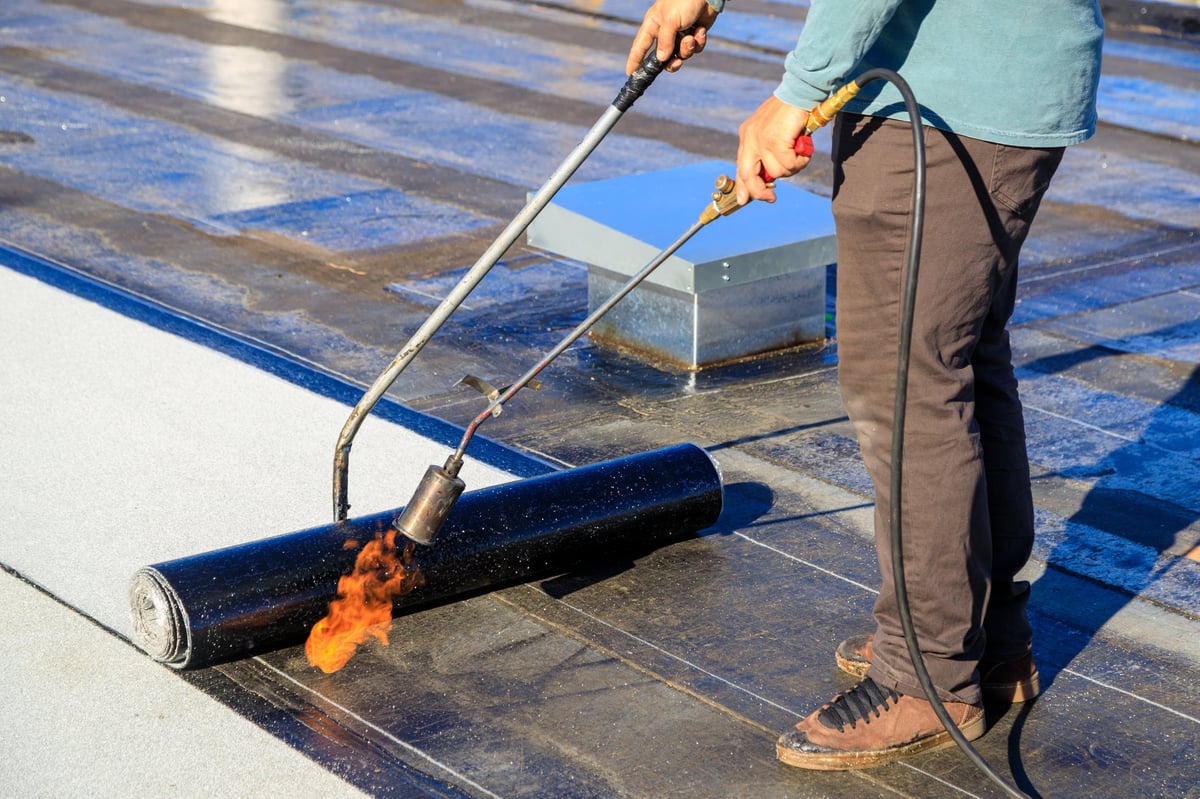
The best of both worlds — combining the proven durability of built-up roofing with modern polymer technology. Modified bitumen delivers exceptional flexibility, puncture resistance, and temperature tolerance for commercial buildings that demand reliable, all-weather performance.
Modified bitumen is an evolution of traditional built-up roofing that incorporates polymer modifiers — either SBS (Styrene-Butadiene-Styrene, a rubber-like compound) or APP (Atactic Polypropylene, a plastic-like compound) — into the asphalt. This transforms standard bitumen into a high-performance material with dramatically improved flexibility, elongation, and temperature resistance. The result is a roofing system that handles extreme weather, building movement, and heavy use better than traditional BUR while being easier to install.
SBS incorporates synthetic rubber polymers, giving the membrane exceptional elasticity and flexibility. It can stretch up to 200% of its original size without tearing — making it ideal for buildings that experience significant thermal expansion and contraction, or in regions with wide temperature swings.
APP incorporates plastic polymers that create a harder, more UV-resistant surface. It excels in hot climates and high-traffic areas where impact resistance matters. APP membranes maintain rigidity under direct sun and resist the softening that plagues standard asphalt in summer heat.
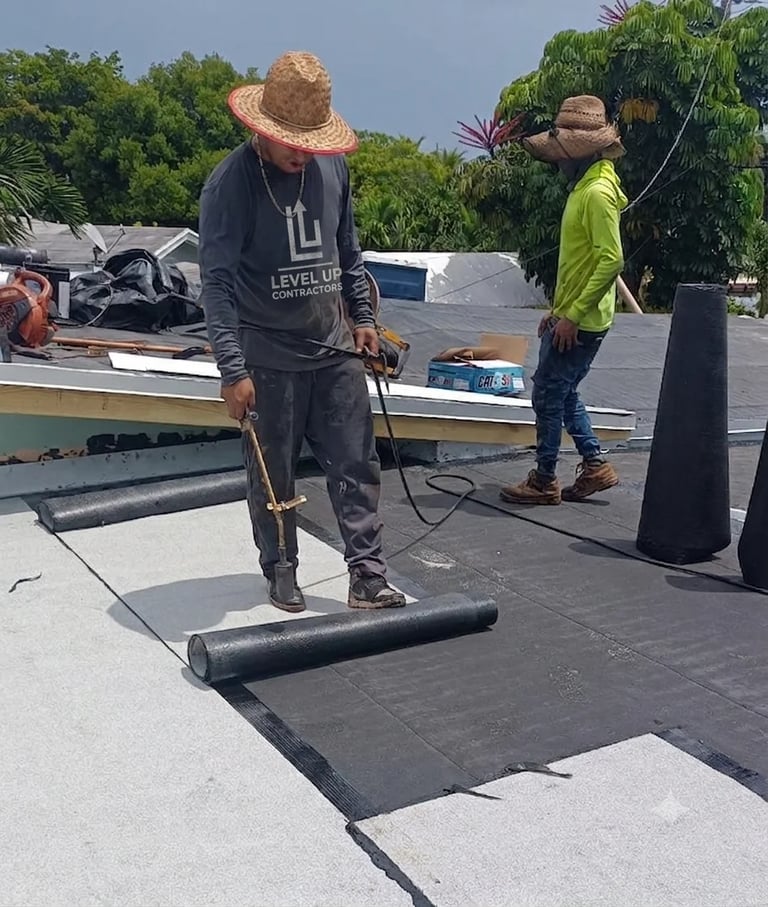
The most common method — a propane torch heats the underside of the roll as it's unrolled, melting the bitumen backing and fusing it to the substrate. Creates a monolithic bond with the roof deck.
Solvent-based or water-based adhesives bond the membrane without open flame. Ideal for buildings where torch work is restricted — schools, hospitals, occupied facilities, or areas with flammable materials nearby.
Peel-and-stick modified bitumen sheets with a factory-applied adhesive backing. The safest and fastest method — simply peel the release film and roll into place. Popular for occupied buildings and tight urban sites.
SBS-modified membranes remain flexible in sub-zero temperatures and stable in desert heat. This all-weather performance prevents cracking and splitting that plagues standard asphalt roofs in extreme climates.
The polymer-enhanced bitumen and reinforcing fabric create exceptional impact and puncture resistance. Modified bitumen handles hail, dropped tools, and rooftop foot traffic better than any single-ply membrane.
Torch-applied and self-adhered methods create a fully bonded monolithic system. There are no mechanically fastened stress points, and the membrane won't flutter or balloon in high winds — a common issue with loose-laid single-ply.
The fully adhered installation method provides outstanding wind uplift resistance — typically rated for winds exceeding 120 mph when properly installed. Ideal for hurricane-prone and high-wind regions.
Falls in the middle of the cost spectrum — more affordable than PVC while offering better performance than basic TPO. The self-adhered option eliminates torch rental costs and reduces labor, further improving budget efficiency.
Damaged areas can be quickly patched with new modified bitumen sheet material using the same installation method. Repairs bond seamlessly to the existing membrane, and the dark surface hides repair work better than white membranes.
Modified bitumen's hybrid nature makes it the versatile workhorse of commercial roofing — equally at home on cold-climate schools as on sun-baked warehouses. Here's where it truly shines.
SBS-modified bitumen is the go-to choice where temperatures swing wildly — from freezing winters to scorching summers. Its rubber-like elasticity absorbs thermal movement without splitting, making it the top pick for Midwest, Northeast, and Canadian buildings.
Buildings with extensive rooftop HVAC units, solar arrays, satellite dishes, or regular maintenance traffic need a roof that can handle the abuse. Modified bitumen's thick, impact-resistant construction is built for the punishment.
The self-adhered and cold-applied options eliminate open-flame safety concerns, making modified bitumen ideal for schools, hospitals, and occupied office buildings where torch work is restricted or prohibited by fire codes.
The fully adhered installation creates a system rated for hurricane-force winds. For coastal facilities, military bases, and buildings in wind-prone regions, modified bitumen's wind uplift resistance provides critical peace of mind.
| Feature | BUR | TPO | PVC |
Mod. Bitumen
|
|---|---|---|---|---|
| Lifespan | 20-30 Years | 15-30 Years | 20-35+ Years | 15-25 Years |
| Temperature Flexibility | Moderate | Good | Good | Excellent |
| Puncture Resistance | Very Good | Fair | Good | Excellent |
| Wind Uplift Resistance | Excellent | Good | Good | Excellent |
| Installation Cost | Moderate-High | Low-Moderate | High | Moderate |
| Foot Traffic | Excellent | Fair | Good | Very Good |
| Energy Efficiency | Moderate | Excellent | Very Good | Moderate |
Highlighted column indicates where Modified Bitumen excels compared to alternatives
The choice between SBS and APP modified bitumen comes down to your climate, building use, and priorities. Here's a straightforward comparison to help you understand the difference — but our experts will guide you to the right decision during your free assessment.
SBS is the winner in cold climates. Its rubber-modified chemistry keeps it pliable and crack-resistant even at sub-zero temperatures, making it the preferred choice for northern states and Canada.
APP's plastic-modified formula resists softening under intense sun. For southern states, desert regions, and buildings with high solar exposure, APP maintains its integrity where standard asphalt would melt.
Many buildings use SBS for the base layers for flexibility and an APP cap sheet for UV protection — getting the best of both systems. This is increasingly common in regions with all four seasons.
Whether you need SBS flexibility for cold winters, APP durability for scorching summers, or a flame-free installation for an occupied building — our team will design and install a modified bitumen system that's perfectly tailored to your climate, building, and budget.