
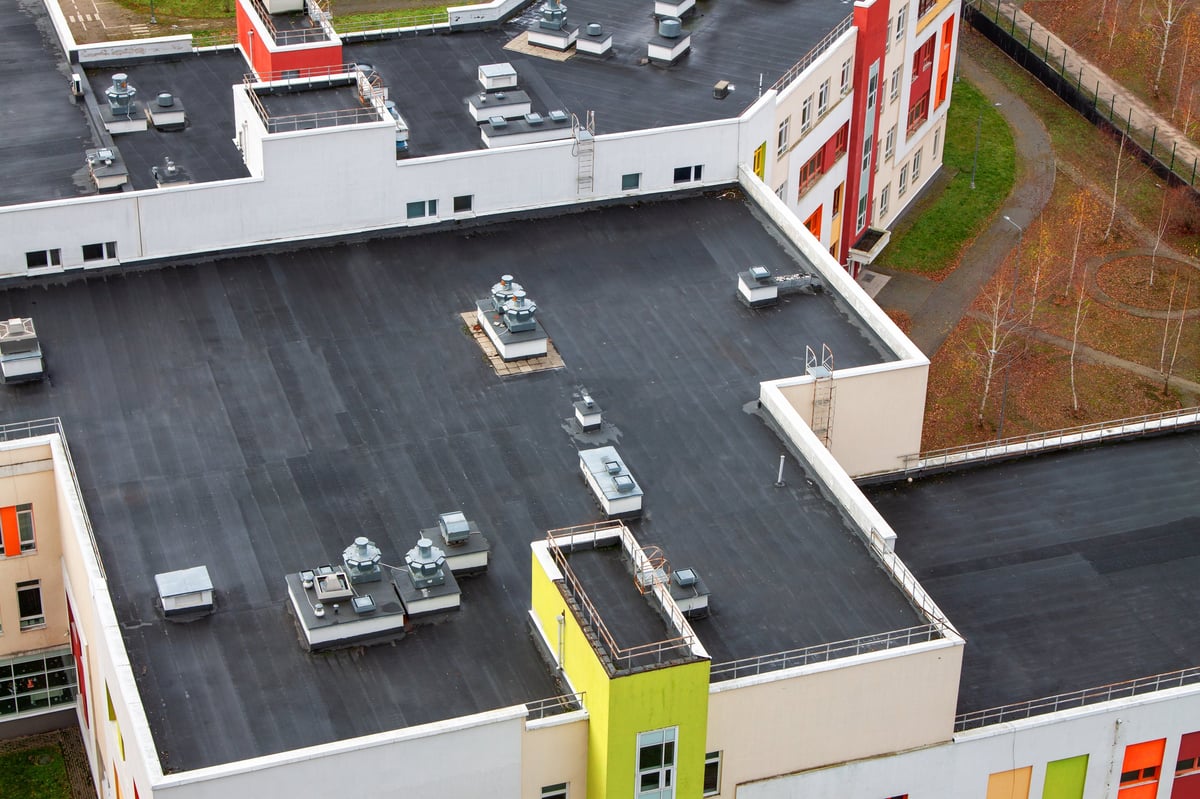
The premium single-ply membrane of choice for demanding commercial environments. PVC roofing delivers industry-leading chemical resistance and the longest lifespan in its class — the go-to solution for restaurants, industrial facilities, and buildings exposed to harsh conditions.
PVC (Polyvinyl Chloride) is a thermoplastic single-ply roofing membrane that has been the top choice for commercial buildings with demanding environments for over 40 years. Its unique chemistry includes plasticizers for flexibility and flame-retardant additives, creating a roof that is simultaneously highly durable, fire-resistant, and immune to chemical attack — making it the gold standard for restaurants, industrial kitchens, and chemical processing facilities.
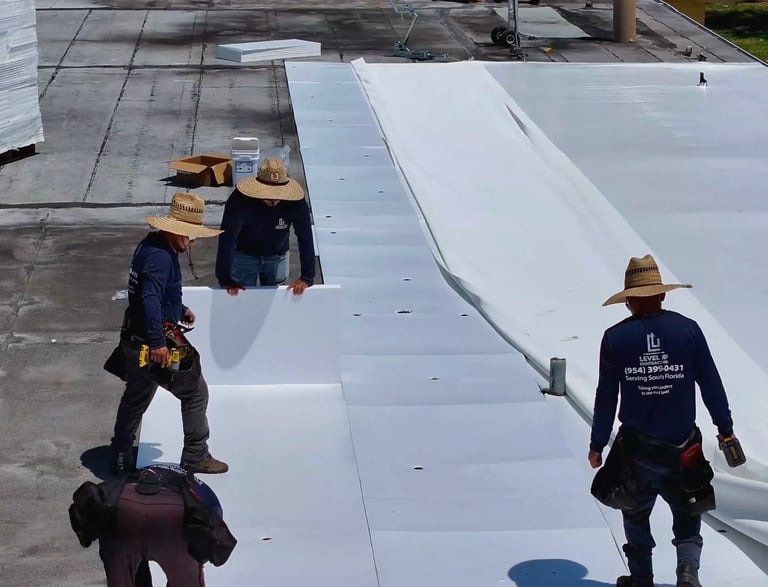
The roof deck is prepared with high-density insulation boards mechanically fastened or adhered to create a smooth, energy-efficient substrate that also serves as the fire-rated base.
Thick PVC sheets (typically 60-80 mil) are rolled out and positioned. The membrane's natural flexibility allows it to conform easily to corners, curbs, and complex rooftop geometries.
Overlapping sheets are fused together using robotic hot-air welders that create molecular bonds stronger than the original membrane — producing seamless, permanent waterproof connections.
Flashings, edge terminations, and penetrations are carefully detailed. Every seam is probe-tested to verify weld integrity, ensuring a watertight system before project completion.
PVC is virtually immune to grease, oils, animal fats, acids, and industrial chemicals that rapidly degrade other roofing materials. This makes it the only viable choice for restaurants and chemical-exposed facilities.
With a service life of 20-35+ years, PVC outlasts every other single-ply membrane. Its inherent chemical stability and thick construction mean less frequent replacement and lower lifecycle costs.
PVC contains built-in flame retardants that make it inherently fire-resistant. When exposed to flame, PVC self-extinguishes — achieving Class A ratings and providing unmatched building safety.
PVC roofing membranes are 100% recyclable at end of life. Old membranes can be reprocessed into new roofing products, reducing landfill waste and supporting corporate sustainability initiatives.
Available in highly reflective white and light gray, PVC membranes reflect significant solar radiation, reducing cooling costs and qualifying for ENERGY STAR and LEED cool roof credits.
Unlike some roofing materials, PVC is impervious to standing water. It won't degrade, delaminate, or support mold growth even when exposed to prolonged ponding water conditions.
PVC is the premium choice when conditions demand the best — from grease-laden restaurant exhaust to corrosive chemical environments, no other single-ply membrane matches PVC's resilience.
Grease from kitchen exhaust is notorious for destroying roofing materials — except PVC. Its chemical immunity to animal fats and cooking oils makes it the definitive choice for restaurants, cafeterias, and food processing plants.
Facilities handling corrosive chemicals, solvents, acids, or manufacturing byproducts need roofing that won't break down. PVC's molecular structure provides an impermeable barrier against industrial chemical attack.
Healthcare facilities with rooftop lab exhaust, sterilizers, and chemical ventilation require a roof that handles aggressive discharges while maintaining sterile conditions. PVC's durability and chemical resistance make it the trusted choice.
For institutional buildings, corporate headquarters, and properties designed for 30+ year ownership, PVC's extended lifespan and minimal maintenance requirements deliver the lowest total lifecycle cost despite a higher initial investment.
| Feature | BUR | TPO |
PVC
|
Mod. Bitumen |
|---|---|---|---|---|
| Lifespan | 20-30 Years | 15-30 Years | 20-35+ Years | 15-25 Years |
| Chemical Resistance | Moderate | Good | Excellent | Good |
| Fire Resistance | Class A | Class A | Class A | Class A |
| Seam Strength | Good | Excellent | Excellent | Good |
| Installation Cost | Moderate-High | Low-Moderate | High | Moderate |
| Energy Efficiency | Moderate | Excellent | Very Good | Moderate |
| Recyclability | Limited | Limited | 100% | Limited |
Highlighted column indicates where PVC excels compared to alternatives
Most roof failures in commercial kitchens and industrial facilities aren't caused by weather — they're caused by chemical attack. Grease exhaust from restaurants literally dissolves TPO and other non-PVC membranes over time. PVC's unique molecular structure makes it impervious to the substances that destroy competing roofing materials.
Animal fats and cooking oils from kitchen exhaust rapidly degrade TPO and modified bitumen. PVC's chemistry is naturally resistant — it's why every major restaurant chain specifies PVC for their rooftops.
Manufacturing byproducts, battery acid mist, and industrial solvents that destroy other roofing materials have virtually no effect on PVC's polymer structure.
PVC doesn't support biological growth. Even in humid environments with standing water, mold, mildew, and algae cannot feed on or degrade the PVC membrane.
Unlike TPO which needs fire-retardant additives, PVC is inherently flame-resistant. Remove the flame source and PVC self-extinguishes — it won't support combustion on its own.
Whether you operate a restaurant with kitchen exhaust, an industrial facility with chemical exposure, or simply want the longest-lasting single-ply roof available — our PVC roofing specialists will deliver a system that protects your investment for 35+ years.