
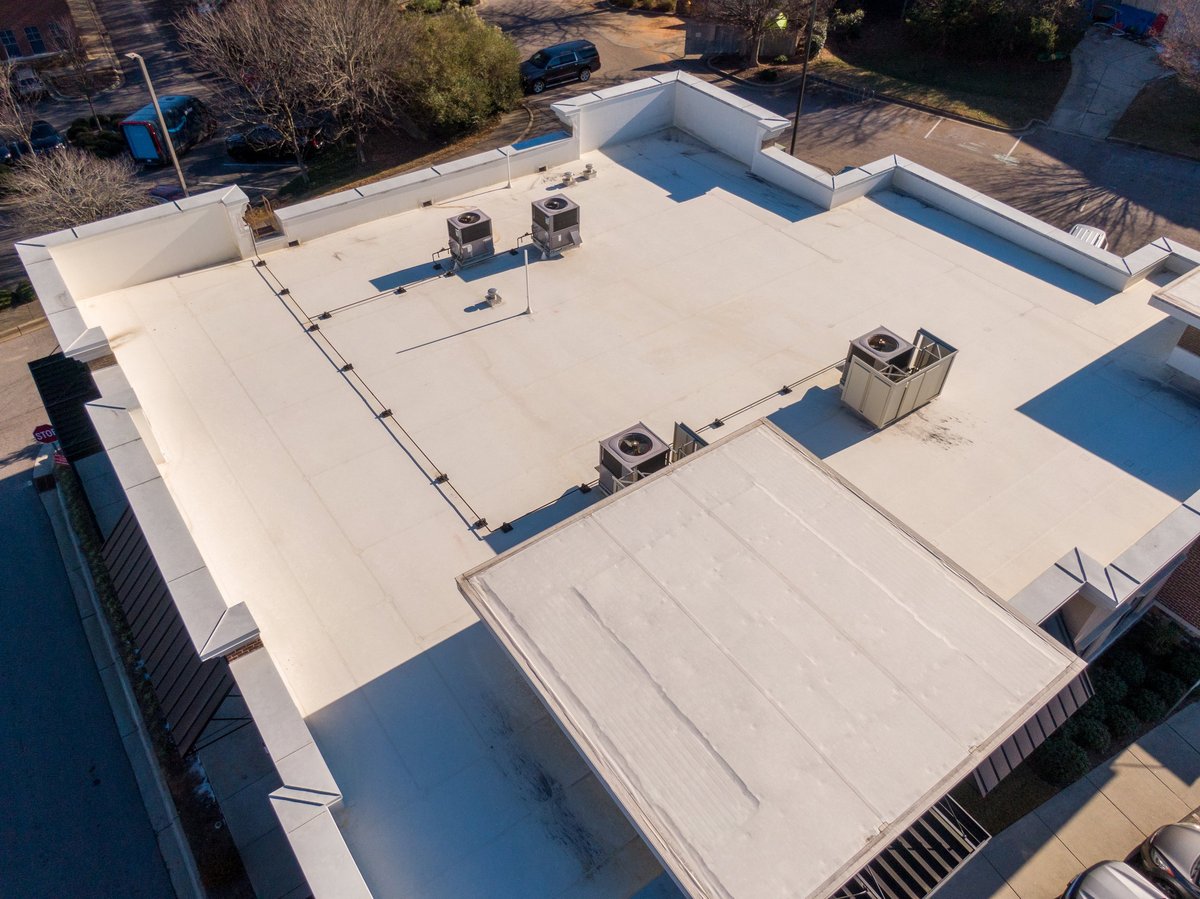
The fastest-growing commercial roofing system in North America. TPO delivers exceptional energy efficiency with its bright white reflective surface, combining cost-effective installation with outstanding durability and weather resistance.
TPO (Thermoplastic Polyolefin) is a single-ply roofing membrane made from a blend of polypropylene and ethylene-propylene rubber with added reinforcing fillers. Available in white, gray, and tan, TPO's reflective white surface has made it the dominant choice for energy-conscious commercial buildings across North America.
The roof deck is cleaned and prepared. An insulation layer is mechanically fastened or adhered to create a smooth, even substrate and add thermal performance.
TPO sheets are rolled out across the roof. The wide sheets (up to 12 feet) mean fewer seams than other single-ply systems, reducing potential leak points.
Overlapping sheets are heat-welded using hot-air guns, creating seams that are actually stronger than the membrane itself — a key advantage over adhesive-based systems.
Flashings, edge metal, and penetrations are sealed and finished. The completed roof is inspected for quality and water-tightness before sign-off.
The bright white surface reflects up to 85% of solar radiation, dramatically reducing cooling costs in summer. Many buildings see 15-30% reductions in energy bills, and TPO can help earn LEED certification credits.
TPO offers the lowest material cost among single-ply membranes while delivering excellent performance. Combined with energy savings, it provides one of the best ROIs in commercial roofing.
TPO excels in all climates — it resists UV degradation, ozone exposure, and chemical attack. It remains flexible in cold temperatures and stable in high heat without cracking or warping.
At just a fraction of the weight of BUR systems, TPO puts less structural load on the building. This makes it ideal for older buildings and reduces engineering requirements for new construction.
TPO's polymer composition gives it superior flexibility and elongation properties. It resists punctures and tears, and can accommodate building movement without compromising the seal.
TPO membranes include fire-retardant chemicals in their formulation and achieve Class A fire ratings when installed over appropriate substrates, meeting the highest fire safety standards.
TPO's combination of energy efficiency, cost-effectiveness, and durability make it the preferred choice for many commercial applications.
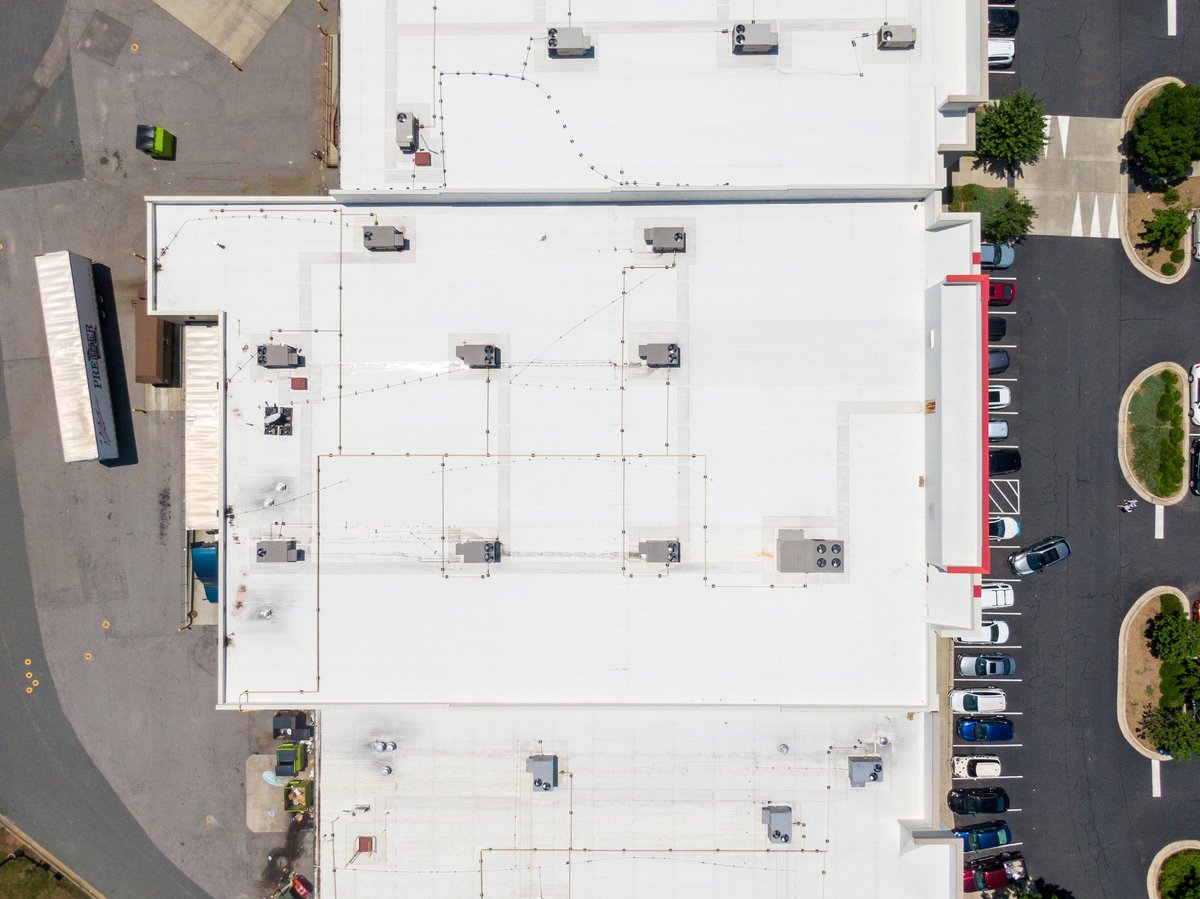
Energy-conscious retail chains and office buildings nationwide choose TPO for its proven energy savings. The bright white surface keeps cooling costs low while maintaining a clean, professional appearance from above.
Large warehouse roofs benefit from TPO's wide sheets and fast installation. The reflective surface reduces heat buildup inside unconditioned spaces, improving working conditions and protecting stored goods.
When budget matters without compromising quality, TPO delivers. It offers the lowest installed cost among single-ply membranes while still providing 15-30 years of reliable protection.
TPO contributes to LEED certification in multiple categories including heat island reduction and energy performance. Its recyclability and energy-saving properties align with corporate sustainability goals.
| Feature | BUR |
TPO
|
PVC | Mod. Bitumen |
|---|---|---|---|---|
| Lifespan | 20-30 Years | 15-30 Years | 20-35+ Years | 15-25 Years |
| Energy Efficiency | Moderate | Excellent | Very Good | Moderate |
| Installation Cost | Moderate-High | Low-Moderate | High | Moderate |
| Weight | Heavy | Lightweight | Lightweight | Moderate |
| Seam Strength | Good | Excellent | Excellent | Good |
| Chemical Resistance | Moderate | Good | Excellent | Good |
| Foot Traffic | Excellent | Fair | Good | Very Good |
Highlighted column indicates where TPO excels compared to alternatives
TPO's bright white reflective surface is its standout feature. By reflecting solar radiation instead of absorbing it, TPO can reduce rooftop temperatures by 50-70°F compared to dark roofs. This translates directly to lower cooling costs and improved occupant comfort.
Buildings with white TPO roofs consistently report significant reductions in summer air conditioning usage compared to darker roofing alternatives.
TPO meets ENERGY STAR cool roof requirements and contributes to LEED credits in Sustainable Sites and Energy & Atmosphere categories.
Many utility companies offer rebates for installing cool roofing systems. We can help identify programs available in your area to further reduce your project cost.
By reflecting heat rather than absorbing it, TPO helps reduce the urban heat island effect, making entire neighborhoods cooler during summer months.
Join thousands of building owners who've switched to TPO for its unbeatable combination of energy savings, affordability, and proven durability. Our team will provide a complete assessment and quote at no obligation.